Escrow Protocols Securing International Transfers in Approved Online Table Game Environments
Xander Ludwig · Sep 25, 2026

Escrow Protocols Securing International Transfers in Approved Online Table Game Environments
Escrow protocols have become central to managing international transfers within approved online table game environments, where platforms facilitate games such as blackjack, baccarat, and poker across multiple jurisdictions. These systems hold funds in neutral accounts until transaction conditions are verified, reducing exposure to fraud while supporting cross-border compliance requirements. Data from regulatory filings show that licensed operators in Europe and North America processed over 40 percent of their international deposits through escrow mechanisms by mid-2025, with adoption rates continuing to climb.
Approved environments typically operate under licensing frameworks that mandate segregation of player funds from operational accounts, and escrow arrangements add an extra verification layer before releases occur. Researchers at academic institutions studying digital payment flows have documented how these protocols integrate with multi-currency ledgers, automatically converting and holding amounts until identity checks and game outcome confirmations align. In practice, a transfer from a European player to an Asian-licensed table game site triggers a hold period that lasts until both the sending bank and receiving platform validate the details through shared APIs.
Core Mechanics of Escrow in Table Game Transfers
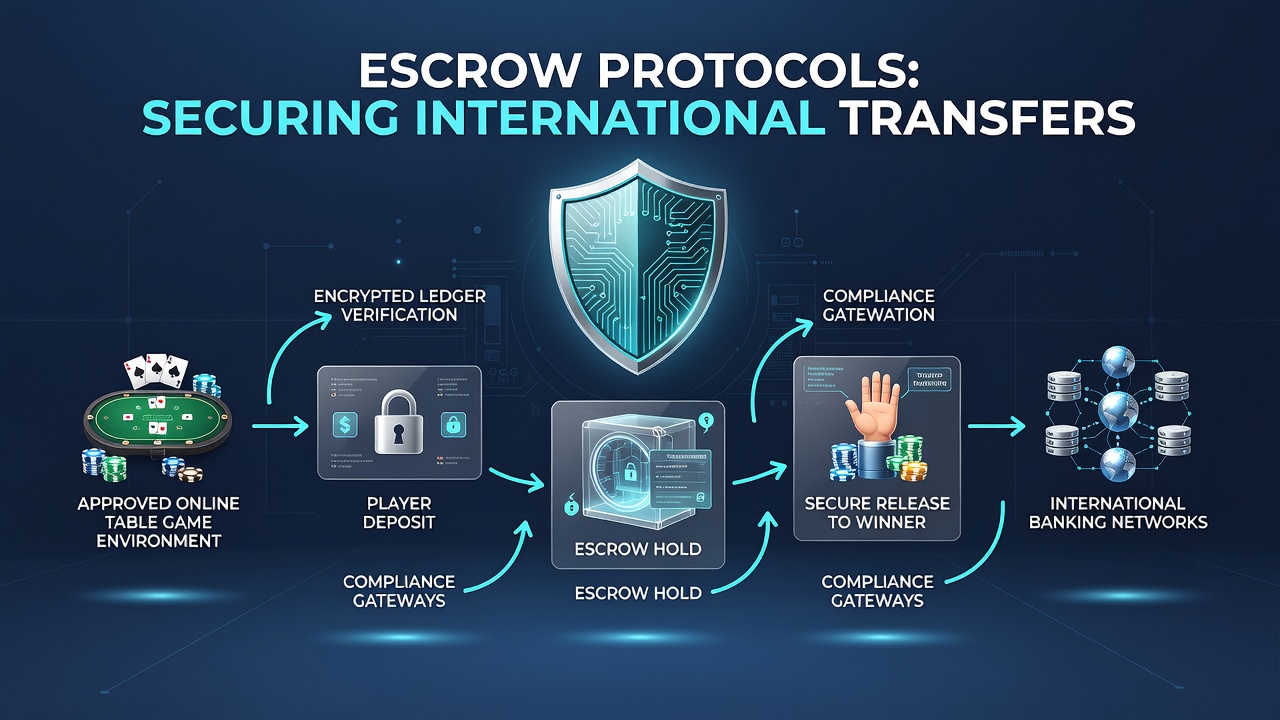
Escrow protocols function through automated smart contracts or third-party custodians that release funds only after predefined triggers are met, such as successful anti-money laundering screening or confirmation that no chargeback flags exist. Observers note that in table game settings, where session lengths and bet sizes vary widely, these holds often span between 24 and 72 hours depending on the jurisdictions involved. The process begins when a player initiates a deposit; the amount moves into escrow rather than directly to the operator wallet, allowing real-time monitoring by compliance teams.
Systems also track withdrawal requests with the same rigor, requiring operators to submit proof of game fairness and player eligibility before escrow releases the funds. Studies from payment technology firms indicate that platforms using layered escrow reduce disputed transaction rates by an average of 28 percent compared with direct transfer models. This holds particular value for international table game networks where players move between currencies and regulatory zones frequently.
Regulatory Drivers Across Regions
Multiple oversight bodies have shaped escrow adoption. The European Commission updated its digital finance strategy in 2024 to encourage escrow use in cross-border gambling, while Canadian provincial regulators began requiring escrow attestations for any operator accepting players from outside provincial borders. Australian authorities followed with guidelines issued in early 2025 that tie license renewals to demonstrated escrow integration for high-value table game transfers.
Those frameworks align with broader financial action task force recommendations on virtual asset flows, pushing operators to maintain auditable escrow records that span at least five years. Figures released by the International Association of Gaming Regulators reveal that jurisdictions enforcing escrow protocols recorded a 15 percent drop in international transfer-related compliance violations between 2023 and 2025. Operators in approved environments must submit quarterly reports detailing escrow hold times, release rates, and any flagged anomalies.
Integration with Identity and Security Layers
Escrow protocols rarely operate in isolation; they synchronize with biometric authentication systems and real-time statistical overlays used in live dealer environments. When a player from one continent joins a table hosted in another, the escrow layer confirms that both the device fingerprint and the funding source match pre-approved records before allowing the session to proceed. Research published by university payment security labs shows that combining escrow with geofencing technologies further limits unauthorized cross-border activity, cutting suspicious transfer attempts by roughly one third.
Operators report that escrow timelines shorten when players maintain verified multi-currency ledgers, because prior checks reduce the need for repeated screening. In September 2026 several major platforms introduced unified escrow APIs that link directly to central bank instant payment rails in participating countries, trimming average hold periods from 48 hours to under 12 for verified accounts. These updates followed pilot programs conducted across licensed networks in three continents.
Operational Impact on International Table Game Play
Table game environments benefit from escrow because session volatility and multi-hand sequences create complex transaction patterns that direct transfers struggle to monitor. Escrow systems log each bet placement against the held balance, creating an immutable trail that regulators can audit without accessing full operator databases. Data compiled by industry research groups indicate that player retention in escrow-enabled international poker and baccarat rooms rose 12 percent year-over-year, largely because participants experienced fewer payment interruptions.
Yet challenges remain around latency for players in regions with slower banking infrastructure, where escrow confirmation can extend beyond standard windows. Licensed operators address this by offering tiered escrow options that prioritize speed for lower-risk profiles while maintaining stricter holds for new or high-volume accounts. The approach mirrors practices already embedded in traditional financial markets but adapted to the 24-hour nature of online table gaming.
Conclusion
Escrow protocols continue to expand within approved online table game environments as regulators and operators seek reliable methods for handling international transfers. Their integration with existing compliance tools provides documented reductions in fraud and dispute rates while supporting the operational demands of cross-border play. Ongoing updates, including those scheduled around September 2026, point toward further streamlining without compromising verification standards.